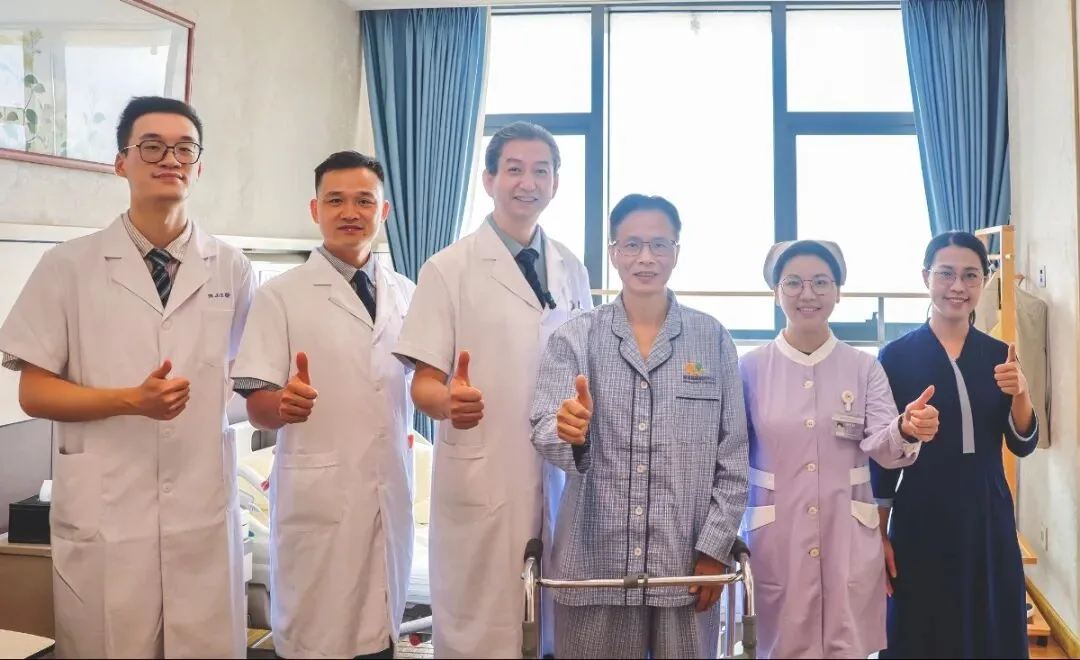
For most of his life, the border between Hong Kong and Guangdong was something Mr. Leung crossed for shopping, for family, for a weekend. It became relevant for a different reason after he fell at home and destroyed his hip.
The injury was severe enough that the question was never whether he needed surgery. It was where. And on that question he was unusually clear about what he was actually weighing: not the reputation of the operating theatre, but what would happen to him in the weeks afterwards, when the operation was over and the recovery began.
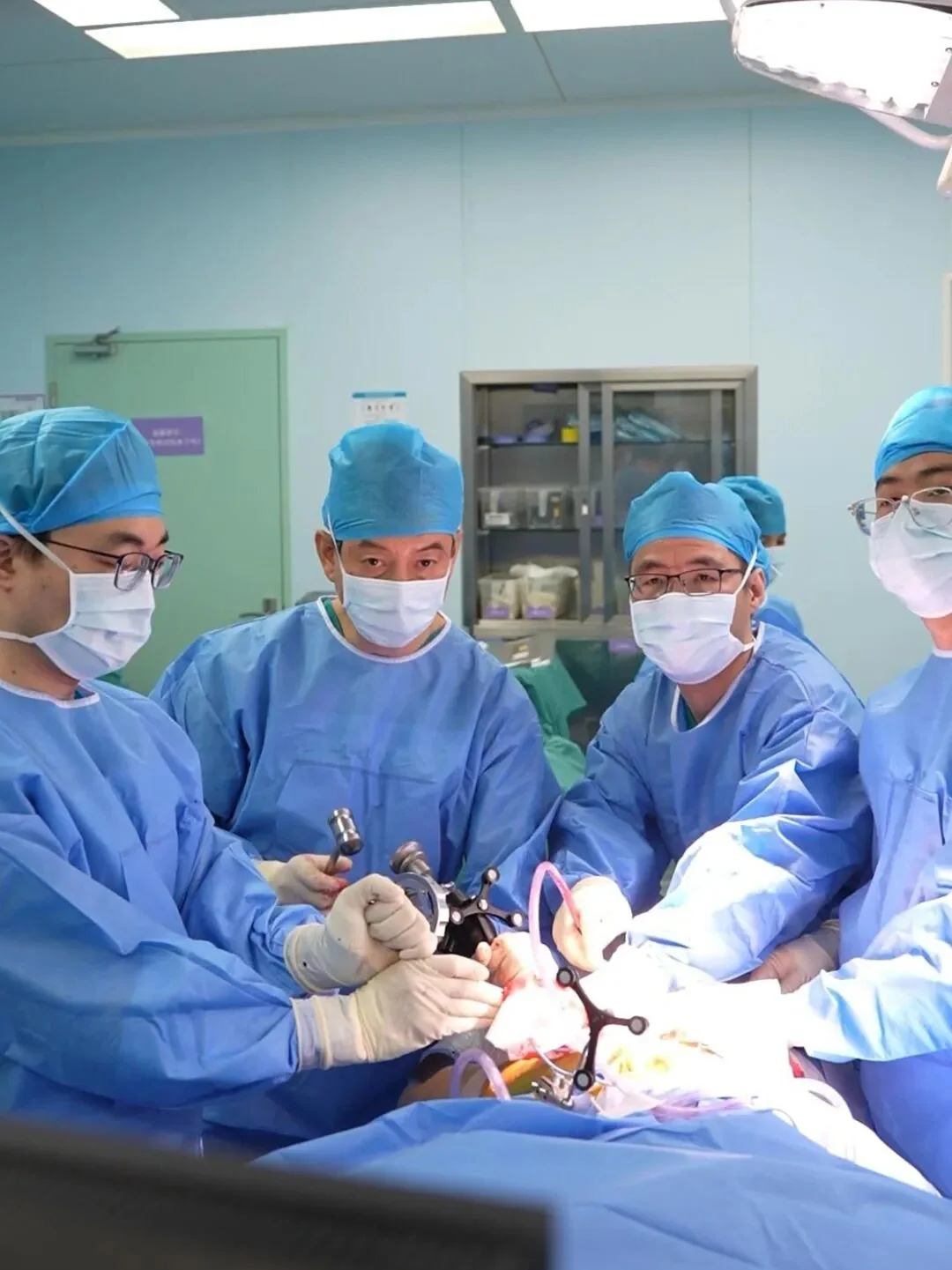
A Fall, and a Question About Recovery
He describes the weeks after the fall in the plain terms of someone whose life had been narrowed by pain: severe damage to the hip joint, constant pain, and nights without sleep. Walking became a negotiation with a frame. Surgery was no longer a decision to be scheduled — it was the only remaining route back to ordinary movement.
"What I cared about most was not whether I was treated in Hong Kong or somewhere else," he says. "It was the quality of the rehabilitation care afterwards."
That is not the criterion most patients start with. It is, however, the one that tends to decide whether a hip replacement feels like a success five years later. When he learned that Foshan Chancheng Hospital paired robotic-assisted joint surgery with a structured, full-cycle rehabilitation programme, he made his decision: for the long term, the trip north was worth testing.
What the Joint Robot Actually Does
A hip replacement is, mechanically, a problem of position. The surgeon removes the worn joint and implants a prosthesis: a cup set into the pelvis, a stem driven into the femur, and a bearing between them. The operation is well established, but the margin for error is small. A cup placed at the wrong angle raises the risk of dislocation and accelerates wear. A leg left slightly long or short changes how a patient walks — and, over time, how the rest of the body copes.
The joint robot changes how that position is decided. Before surgery, imaging is used to build a three-dimensional plan for the specific patient: where the cup should sit, at what angle, at what depth, matched to the anatomy in front of the surgeon rather than to an average. During the operation, the robotic arm works within that plan, and the system tracks the patient's position in real time, adjusting as the joint is prepared and the implant goes in.
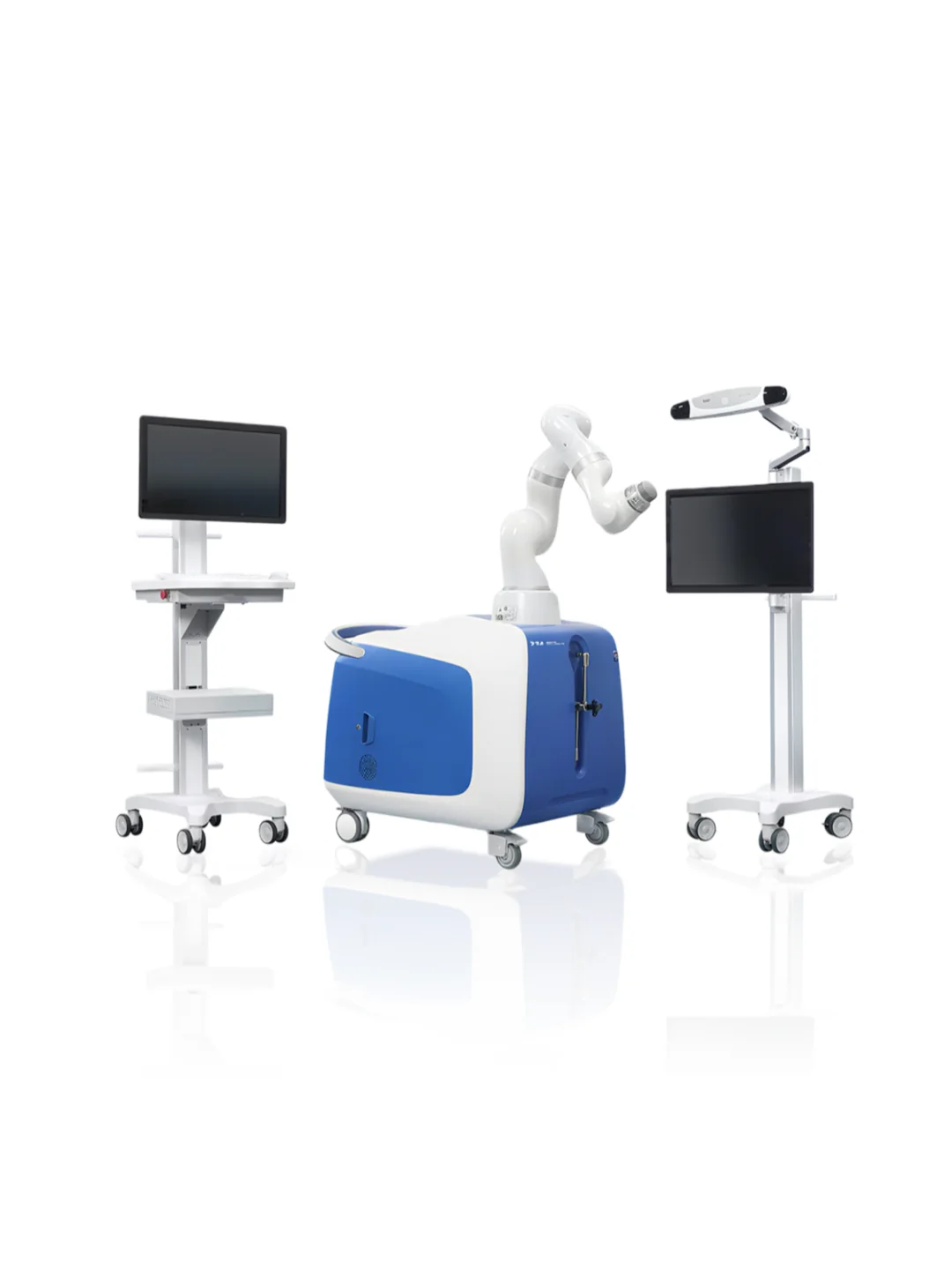
At Foshan Chancheng Hospital, that workflow delivers sub-millimetre positioning, with angular deviation of the implanted components held within one degree. In practice, this is what a patient experiences as a hip that feels predictable: fewer soft-tissue sacrifices during the approach, less blood loss, and a joint whose mechanics were decided in advance rather than estimated in the room.
Mr. Leung, who had arrived with a Hong Kong patient's assumptions about where the best surgery is performed, came out of it with a revised opinion. The standard, he said, was comparable to the top hospitals he knew — and on precision, he thought it had the edge.
The Night Shift
What he talks about most, though, is not the robot. It is the hours when nothing is scheduled: the middle of the night, when a patient who has just had a hip replaced needs something and has to decide whether to press the call button.
"Day or night, the moment I pressed the button, someone was at the bedside," he recalls. "I often needed help at night, and I felt genuinely bad about it — they had already worked hard all day and could not rest at night either." What stayed with him was that the response never carried the cost of the interruption. "They never once complained. They just solved it. That feeling of being valued — I had not experienced it in Hong Kong."
It is a small thing to describe and a difficult thing to run. Round-the-clock responsiveness on a surgical ward is a staffing decision, not a slogan, and it is the part of a hospital that a patient cannot evaluate from a website.
A Ward That Did Not Feel Like a Hospital
He had expected the clinical side. He had not expected the room. "This is not a ward — it's a resort," he says, and the exaggeration is doing real work: from the room to the corridor, he says, the pressure he associates with hospitals was simply absent.
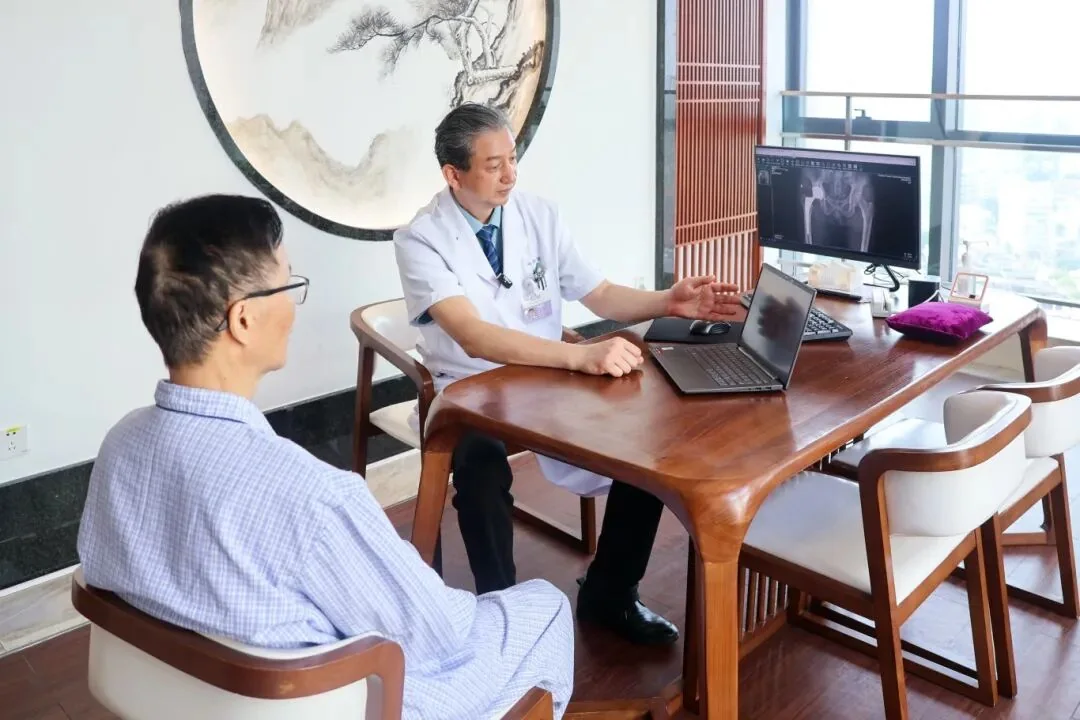
Two details did more for him than the decor. The first was the food. "The meals taste almost exactly like Hong Kong," he says, singling out a pickled fish dish he still brings up. It sounds trivial until you consider what a familiar meal does for a patient who is recovering alone in another city: it removes one more thing that has to be adjusted to.
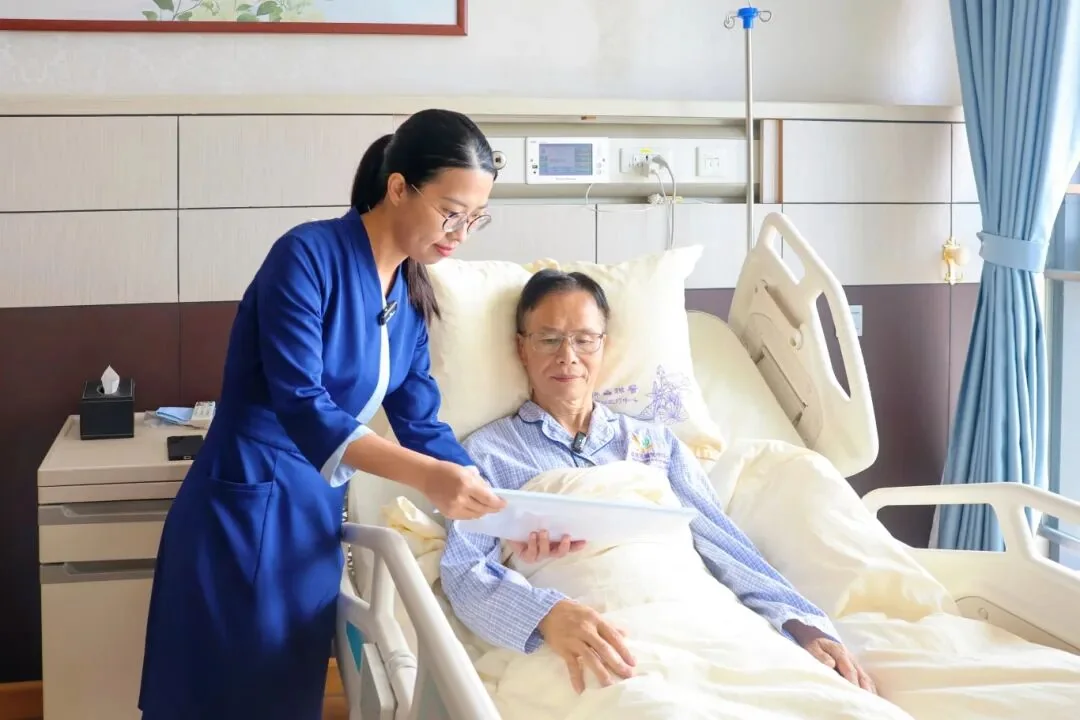
The second was language. Most of the staff around him spoke Cantonese, and the conversations that usually require a translator — how the pain was, what the next step was, whether something was normal — happened directly. Where a colleague spoke only Mandarin, he says, they were patient enough that it never became a problem.
His family, meanwhile, were in Hong Kong. The hospital set up an online group that carried updates across the border: what had been done that day, how it had gone, what came next. "Every step was explained clearly in the group," he says. His family's confidence in the process, he adds, became part of what allowed him to concentrate on recovering.
What the Border Actually Costs
Cross-border care is often described as a question of distance and price. Mr. Leung's account suggests the real friction sits elsewhere: in whether the patient can speak, whether the family can follow, and whether the week after surgery is staffed well enough to absorb a bad night. Those are the things that decide whether travelling for treatment feels like a calculated choice or a gamble.
The hospital has built its cross-border programme around that reading — Cantonese-speaking nursing teams, a Hong Kong-style approach to recovery management, and coordination that starts before admission and continues past discharge. It is the sort of arrangement that is easy to announce and difficult to deliver consistently at three in the morning.
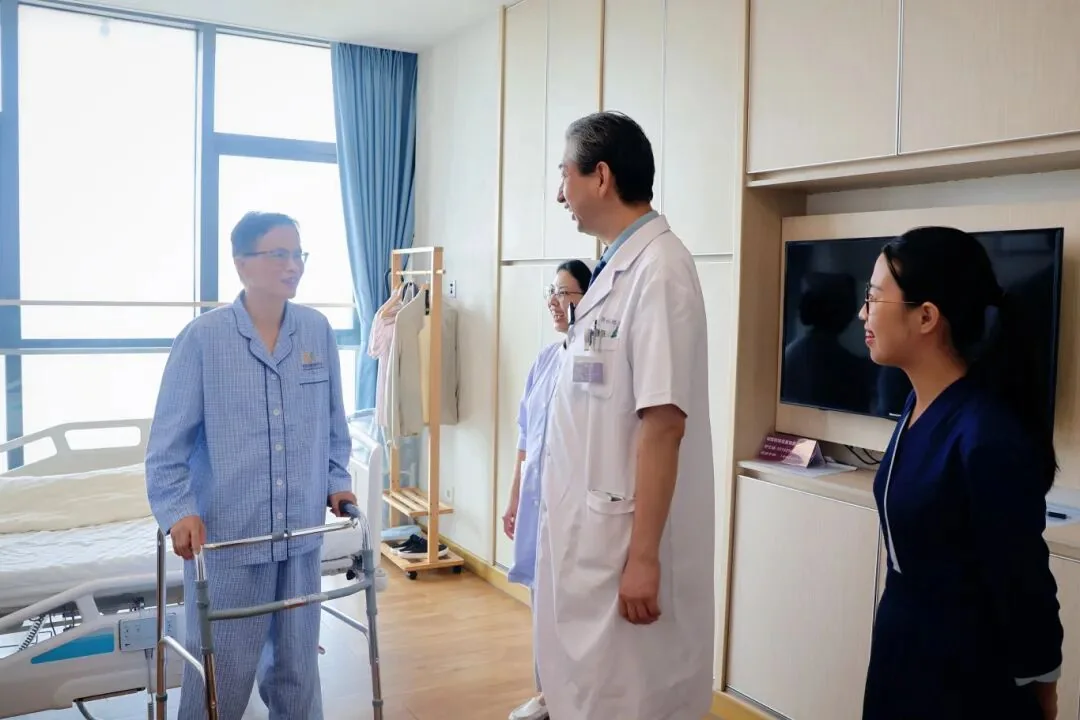
His own measure of the result is straightforward. He walks more steadily each day; the pain has receded sharply; the recovery has run ahead of what he expected. Asked whether he would recommend the hospital to friends in Hong Kong, he does not hedge: "Absolutely." Not, he makes clear, because of the robot alone, but because the whole episode — the planning, the operation, and the ward — treated him as someone whose experience of recovery mattered as much as the image on the screen.
Travelling from Hong Kong or overseas for joint replacement? Our international team can review your imaging before you travel, explain the robotic-assisted and conventional options, and arrange Cantonese or English support throughout your stay.