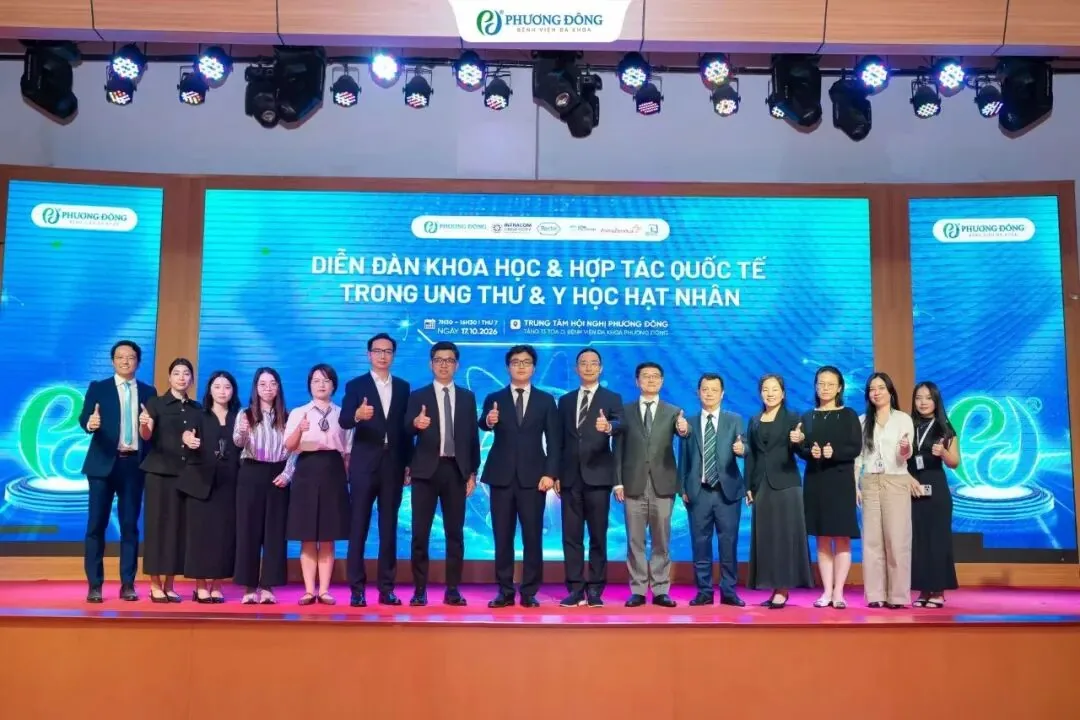
From October 17 to 19, 2026, a delegation from Fosun Health spent three days in Vietnam on a medical exchange and site-visit programme, signing cooperation agreements with three of the country's leading healthcare institutions: Phuong Dong General Hospital in Hanoi, Hung Vuong Gia Lai Hospital in the Central Highlands, and FV Hospital in Ho Chi Minh City.
The trip was more than an exercise in international expansion. It was the first sustained test in Southeast Asia of the Fosun Health philosophy summed up as “Advanced Care, Closer to You” — the idea that the standard of care a patient receives should not depend on which side of a border they happen to live.
A Delegation Built on Clinical Strength
The delegation was led by Shen Yun, Co-President of Fosun Health, and drew its clinical bench from the group's flagship hospitals in the Greater Bay Area: Dr. Peng Yucheng, Director of the International Medical Center and Head of Internal Medicine at Foshan Chancheng Hospital; Prof. Chen Tao, Medical Director of the International Medical Center at Foshan Chancheng Hospital; Wu Yaobo, Deputy General Manager of the International Cooperation Department at Fosun Health and Vice President of Foshan Chancheng Hospital; Zhou Jing, Assistant to the President and Director of the International Medical Center at Shenzhen Hengsheng Hospital; and Tan Yue'ai from the Fosun Health Vietnam team.
The composition mattered. The agreements signed over the three days were clinical in substance — oncology, cardiac care, assisted reproduction, traditional medicine — and the people in the room were the ones who would have to deliver them.
Hanoi: A Teleconsultation Room That Stays Open
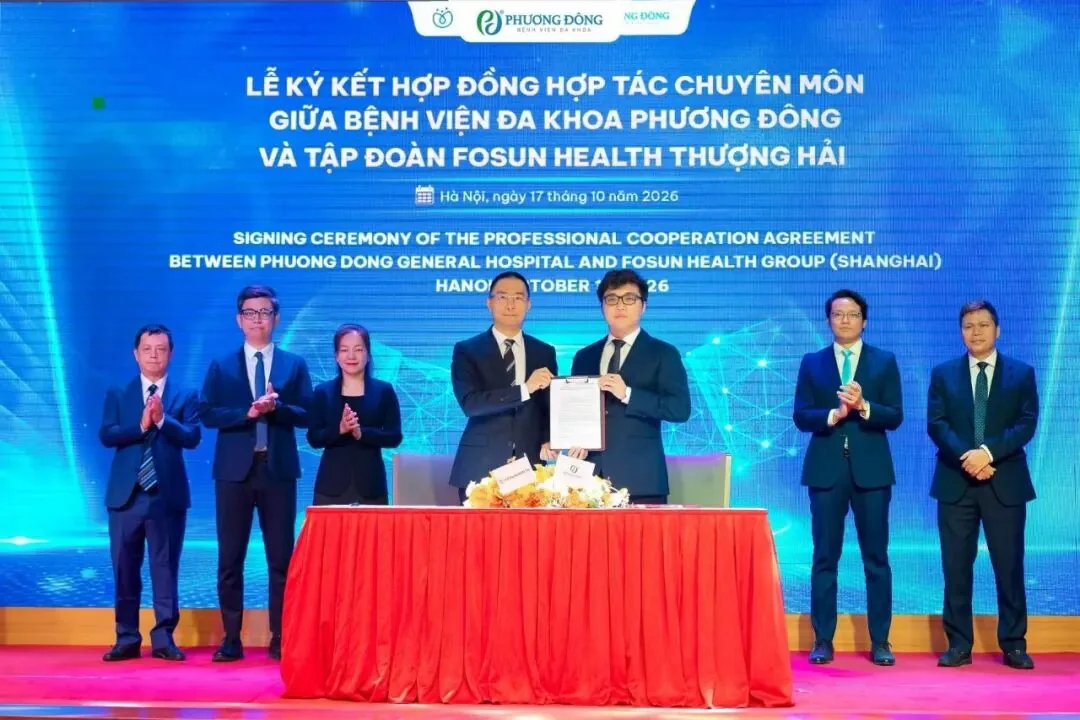
On October 17 the delegation arrived at Phuong Dong General Hospital, one of the largest private hospitals in Hanoi. After a round of detailed discussions, Shen Yun and Nguyen Cong Minh, General Manager of Oriental Medical Group, signed the cooperation agreement on behalf of the two organisations.
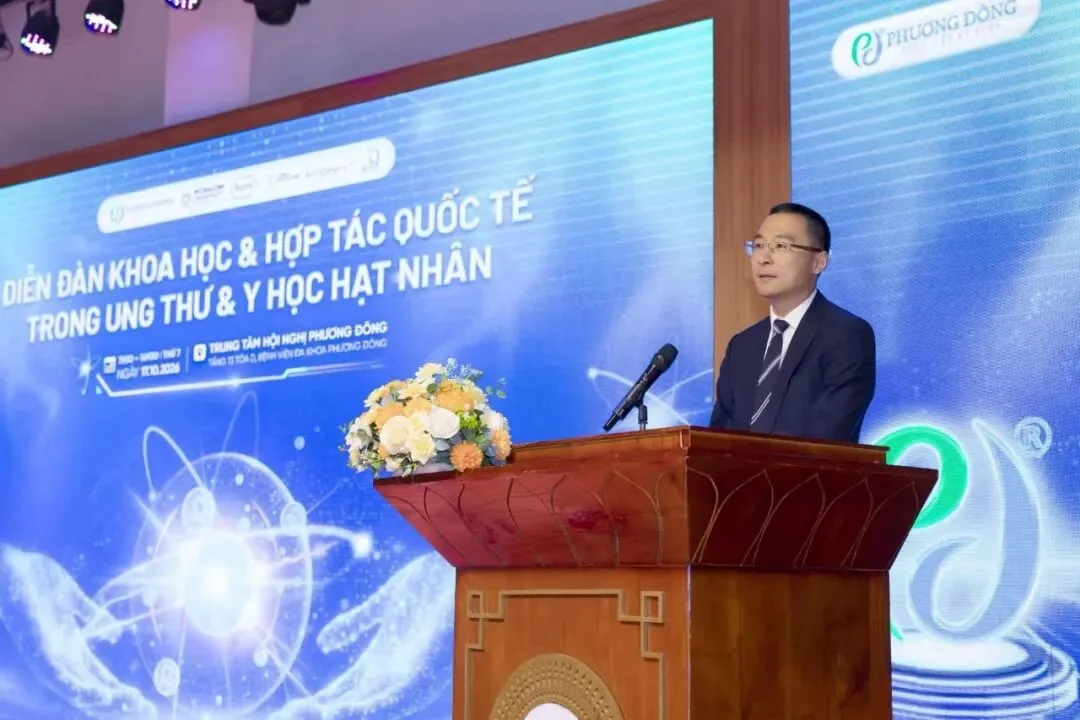
The same day the hospital hosted a scientific forum and international cooperation exchange under the theme “Latest Advances in Cancer Diagnosis, Treatment and Nuclear Medicine.” Prof. Chen Tao, an expert in cancer immunotherapy at Foshan Chancheng Hospital, was invited to speak on “CAR-T Cell Therapy: Technological Evolution, Research Progress in China and Regional Clinical Value,” setting out where Chinese CAR-T programmes now stand and what that experience could mean for patients in the region.
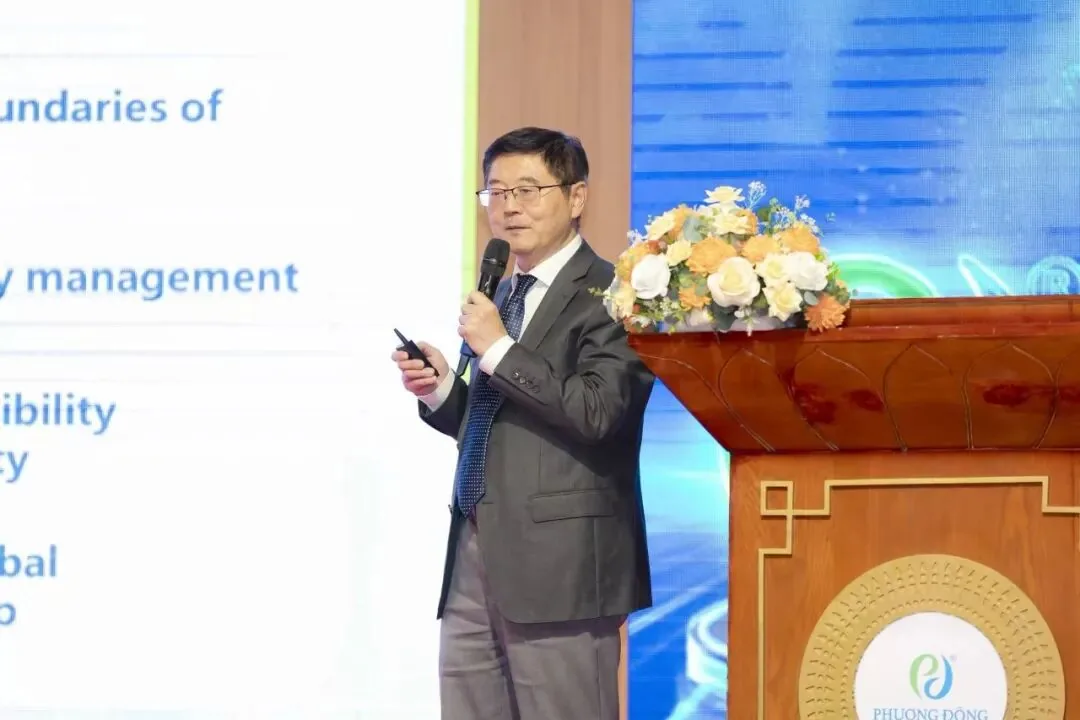
The academic session did not stay inside oncology. Specialists from both sides worked through complex cases and then widened the conversation to cardiology, cardiac surgery, assisted reproductive medicine and traditional medicine — the practical shape of multidisciplinary care moving across borders.
The day's concrete outcome was a room. The Fosun Health – Phuong Dong International Teleconsultation Center was formally inaugurated at the hospital's Oncology Center, giving specialists in the two countries a standing mechanism rather than a one-off visit for reviewing cases together and coordinating patient care.
Central Highlands: Hung Vuong Gia Lai Hospital
On October 18 the delegation travelled inland to Hung Vuong Gia Lai Hospital, part of the Hung Vuong Healthcare System, one of Vietnam's best-known private hospital groups. The agreement was signed by Pham Van Hoc, Vice Chairman of the Vietnam Private Hospitals Association and Chairman of the Hung Vuong Healthcare System, in person — a signal of how seriously the Vietnamese side regards the partnership.
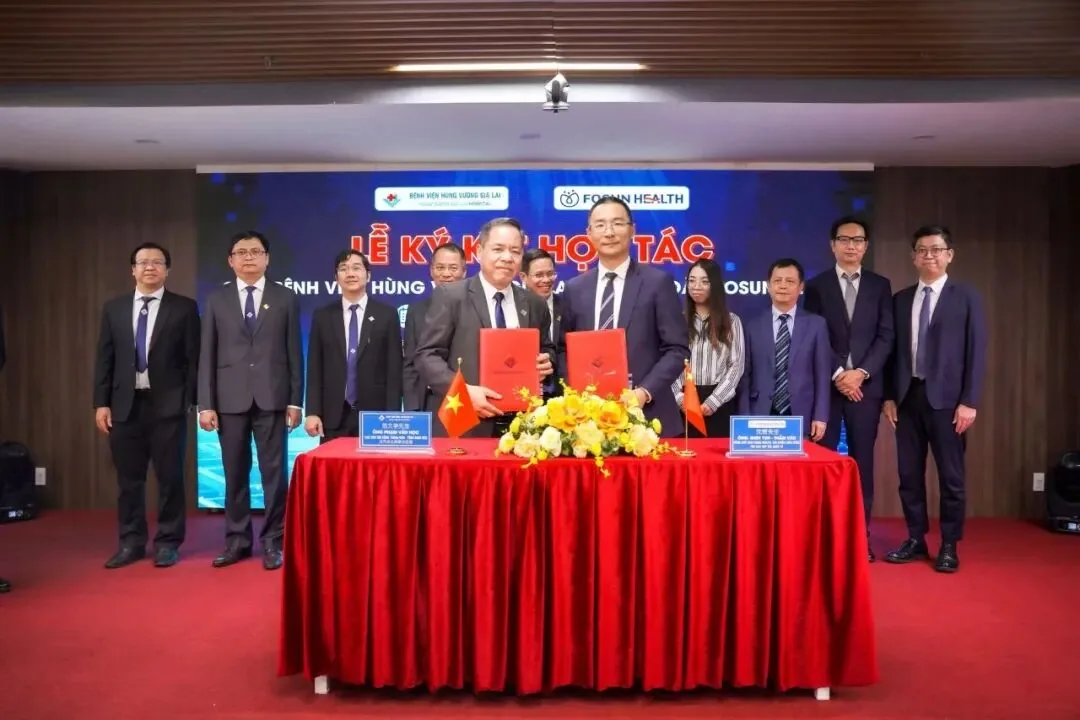
For patients in the Central Highlands, the significance is geographic as much as clinical. Gia Lai sits a long way from Vietnam's main tertiary centres; a structured link to Chinese specialist capacity shortens the distance that a difficult diagnosis otherwise imposes.
Ho Chi Minh City: FV Hospital and JCI Standards
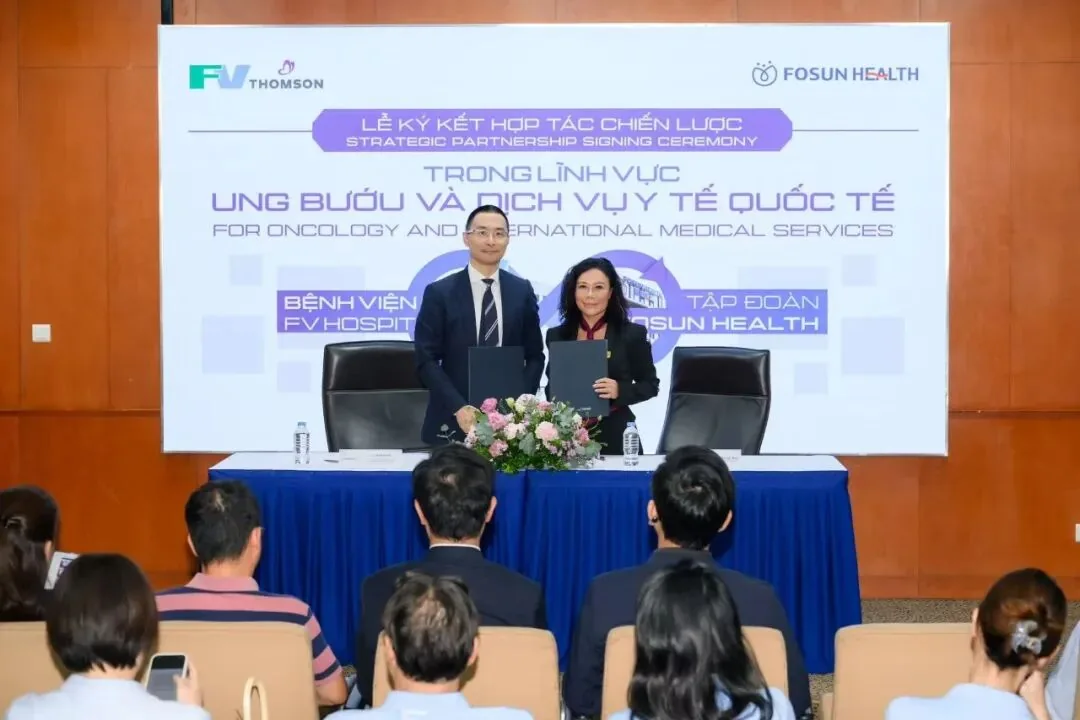
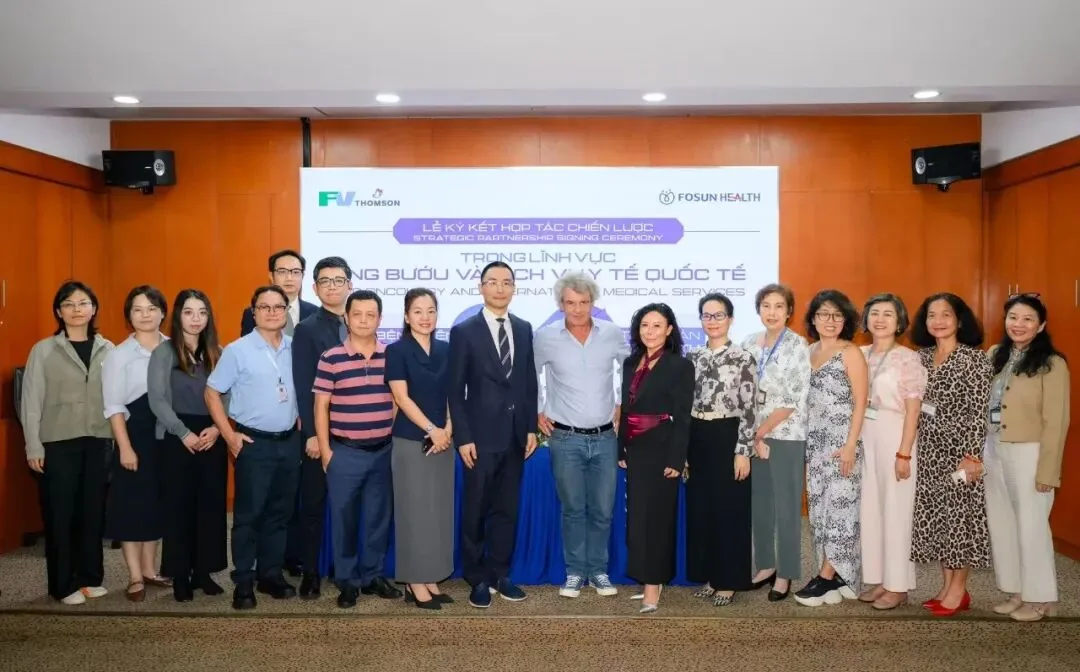
On October 19 the visit closed in Ho Chi Minh City, where Fosun Health signed a memorandum of understanding with FV Hospital — a member of Singapore's Thomson Medical Group and one of only two private hospitals in Vietnam holding international JCI accreditation.
Dr Jean-Marcel Guillon, Founder and CEO of FV Hospital, attended and delivered remarks. Nguyen Thi Le Thu, General Manager of FV Hospital, signed on behalf of the hospital.
Pairing with a JCI-accredited partner matters for a simple reason: accreditation is a shared language. Two hospitals that already measure themselves against the same standards can align protocols, share clinical governance and move patients between them without the usual friction of mismatched expectations.
Six Dimensions, Not a Handshake
Across all three stops, the Vietnamese institutions raised the same question in different forms: what does this partnership actually put in place?
Shen Yun answered it in six parts. “Our cooperation is not limited to reciprocal visits,” he said. “It covers physician training, technical guidance, remote consultation, joint patient care, co-development of specialty services, and collaboration across the wider Fosun ecosystem. Through open sharing of our medical expertise we want to bring patients in Southeast Asia ‘Advanced Care’ that reflects international standards. And by connecting healthcare networks and resources, we want ‘Closer to You’ to mean more than physical distance — it should mean a seamless journey and compassionate care at every point of contact.”
What It Means for Patients
Cooperation agreements are usually written for institutions. Their effects are felt by individuals — and for international patients the practical consequences are fairly specific.
A patient in Hanoi with a difficult oncology diagnosis can now have that case reviewed by Chinese specialists without leaving the country, through the teleconsultation center at Phuong Dong General Hospital. A patient whose treatment calls for a therapy not yet available locally has a defined referral path rather than an improvised one. And where treatment does involve travelling to China, the six cooperation areas — training, technical guidance, remote consultation, joint care, specialty co-development and ecosystem collaboration — are the mechanisms that make continuity of care possible after the patient goes home.
Foshan Chancheng Hospital has run an international medical service since 2019 and now serves patients from more than 140 countries and regions. Its International Medical Center combines outpatient care, inpatient care, health screening and rehabilitation, pairs every patient with both a general practitioner and a specialist, and holds direct billing arrangements with more than 30 international insurers — the infrastructure that cross-border partnerships ultimately depend on.
From Hanoi in the north, through Gia Lai in the centre, to Ho Chi Minh City in the south, the three days formed a single line. The agreements signed along it will be judged by what patients in all three places can now reach that they could not before.
Based in Vietnam and considering treatment in China? Our multilingual team can arrange a remote second opinion first, then handle the medical visa, interpretation and travel once you decide to come.